 (1)__largepreview__.webp)
HOW CAN ANY ONE RELIGION CLAIM TO HAVE THE TRUTH?
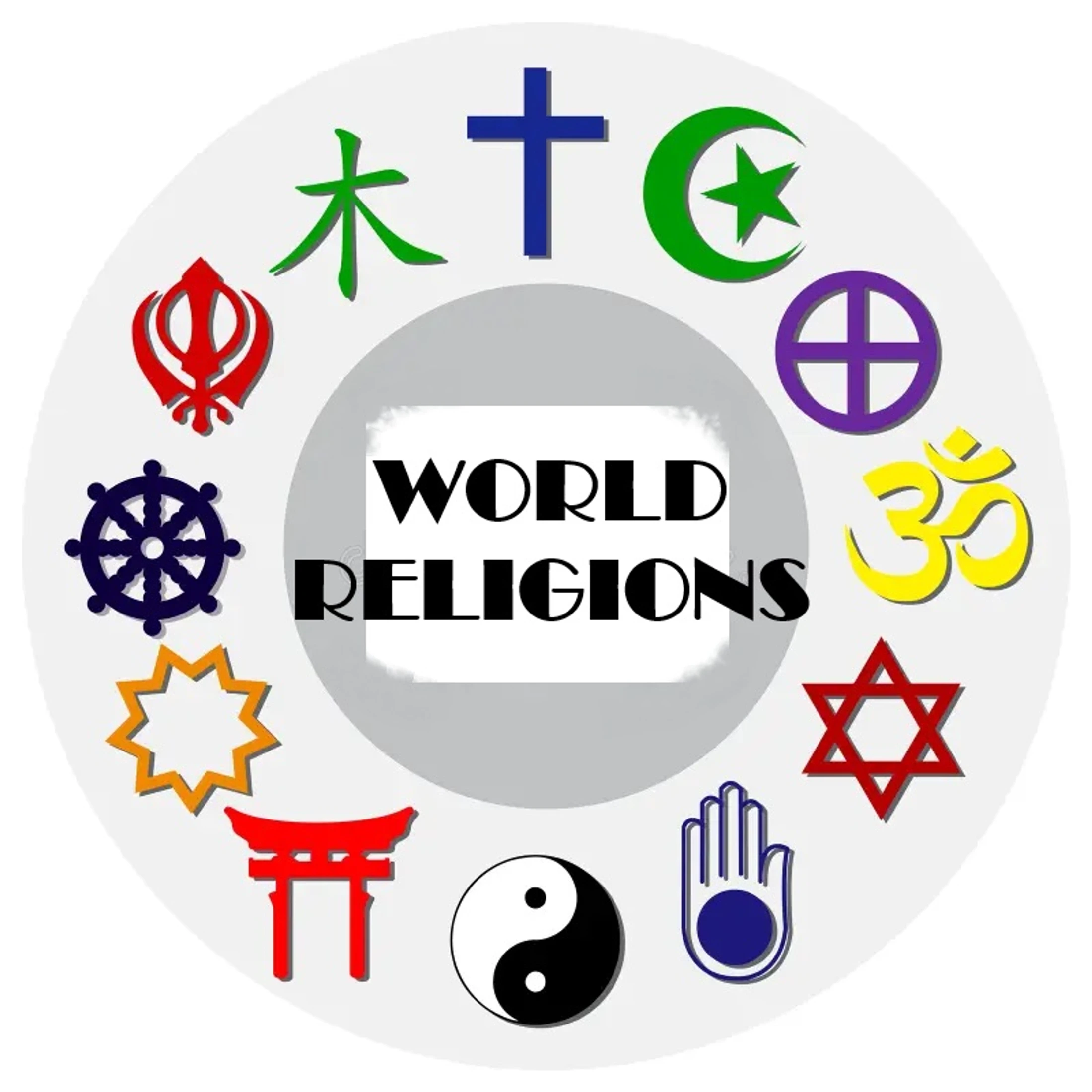
QUESTION:
How can any one religion claim to have the Truth? Aren’t all religions fundamentally the same?
ANSWER:
LIVING IN A PLURALISTIC WORLD
The advantage of growing up in a more pluralistic society is that when we make a decision about who we think God is, we can't make it blindly. We now see a whole generation of people who, because of technology, have been exposed to far more philosophies and other religious ideas than prior generations. Because of this, we see less and less people become Christians just because their parents were.
The advantage of our situation in the West, is that if you decide to fully commit to a worldview, it will be a radical decision. Why? Because it will be made in light of opposing views; in the full knowledge of the claims you must reject in order to commit yourself to a specific religious path.
REDUCING TRUTH CLAIMS TO PREFERENCE
The danger of our situation however, is when we let all the competing ideas begin to cause us to think that we could choose any path and it wouldn't make any difference. This comes from the idea that somehow all religious ways are right simultaneously or somehow “mysteriously” the same.
In other words, inside a pluralistic culture, many people reduce religious truth claims to a matter of preference like preferring red to green. This would be a departure from an older view that tended to consider religious truth claims as we would any other. Such as claims made in geography or biology - as a matter of discerning an independent (non subjective) Reality, like preferring the right answer in the math test to the wrong answer.
Postmodern thinking says that because we each have a background that includes language, culture, and habits that get in the way of our objectivity, none of us is really capable of knowing anything for sure. Anyone who claims to have objective Truth (like the Christian) is kidding themselves, they are really bound up hopelessly inside the inescapable cage of their "perceptions" - clouded as they are by a lifetime of conditioning.
THE ELEPHANT ANALOGY
A favorite illustration of the postmodern religious pluralist is the elephant and the blind men: We're all groping around trying to find truth, like blind men groping an elephant. One has the tail, the other the trunk etc. Each one gives wildly different descriptions of the "true" elephant. Which one is right? Well they all are in a way. So we're told, just like that, all religions are equally valid, they just describe a different part of the "god essence". This is seen as the humble position of a religious agnostic: "we can't know the truth, so all religions are equally valid."

- One it is self-defeating and winds up reversing its own premise.
- Two, it also engenders an arrogance rather than the humility it espouses.
THE ELEPHANT UNDERMINES SUBJECTIVITY
First, consider the premise: We are all blind, ah, but I, the one who beholds this scene can see with 20/20 clarity! Whoever claims this analogy claims to be the uniquely enlightened person who alone has found Truth with a capital T - meanwhile telling us that there is no truth!
At best then, the Elephant analogy says no religion contains all that can be known about spiritual reality. But it undermines the idea of a fully subjective Spiritual Realm.
Quite the opposite: on this analogy Spiritual Reality (like the elephant) is both objective and real. And the analogy opens the door to consider the possibility of a person who, by true seeking and exploration could find a more coherent and complete description of Spiritual Reality (the Elephant), than his neighbor, and thus his "religion" could be far closer to the Truth than others.
THE ELEPHANT UNDERMINES HUMILITY
Secondly, consider the attitude: the person who uses this analogy comes across sounding very magnanimous (“everyone is right!”) and humble (“we can't know anything”). But in reality there’s a deep arrogance implied! Namely: “I, the religious pluarlist, see the situation correctly, unlike you blind people who are groping around in the dark trying to describe your petty, tribal ideas about God!”
The person who uses this analogy, far from being humble about religion, is claiming to have access to a perspective on God that is superior to everyone else. Thus, far from claiming agnosticism about God, they claim to know much about God - namely that He/It is larger than any limited view of the world religions. Really? How did you get to know God so well that you know he's being partially described by all the religions?
WHAT'S YOUR SPIRITUAL AUTHORITY?
In the end, I think the analogy has this to offer: finite, mortal humans do need someone from the outside to give us insight about ultimate things (God, soul, eternity etc). But this someone cannot be the postmodern religious pluralist, for what are their credentials? They’re as biased and culturally conditioned as the rest of us! Have they given any proofs that suggest they really know that we can’t know?
No.
We all then, simply appeal to some Authority for our religious beliefs and the person who says, "they're all describing the same thing!" is as blind as the rest of us. Especially if their authority is their own subjective feeling that God would never limit himself to one religion's view of Him. Why not? What's your authority for believing that idea except your own wish that God be that way and not some other way?
No matter your stance on religion, we all take a “truth risk”! There are no risk free, catch-all philosophies that embrace all religions as one. Each person must make an existential leap at some point. The postmodern view that all religions are the same will not do, because it automatically excludes the person who does not believe that all religions are the same! No worldview is perfectly inclusive of all religious claims, unless that worldview embraces incoherence.
BETTING THE FARM ON JESUS
Again, the analogy does offer us something: for us to have confidence that we are describing the "elephant" rightly, we need an outside observer - one who is not blind, but who sees the situation clearly. For Christians, that one is Jesus Christ.
Our confidence begins with the idea that the New Testament is at least a roughly historical document – there is a rock solid case for this. We find there someone who claims to be both God and Man, and who leaves convincing evidence to have stood on both sides of the grave. Based on this, Christians have decided that He is who he said he was.
In the Elephant metaphor, He is therefore the man who sees. He is the one who speaks to all us "blind men" to tell us what it is we're touching. Against the template of his insight, his teaching, his life, Christians decide to measure what is true, what is partially true and what is false.
So while I may be surrounded by other worldviews and religions, and while I'm not 100% sure of my own insights... the elephant analogy provides a key to find a way out of hopeless subjectivity and not-knowing. It's not in affirming everyone's pet ideas as equally valid (how can they be, when so many are mutually contradictory?!) The hope is in finding an authoritative voice from someone who "sees".
Christians humbly bet the farm on Jesus Christ to know truth with a capital "T" – and of course we do not claim to have all truth (1 Cor 13:12) or that there is no truth in other religions. Far from it! But where their groping insights and belief structures fundamentally disagree with Jesus, who he was, and what he taught, we must respectfully disagree with them. They are, we believe, on those points false, since they disagree with Jesus who alone shows us the Elephant! (John 14:6)